Wildlife Institute of India Syllabus 2026
How Wildlife Institute of India project interviews are decided: the 50-mark shortlist, and the field work each project will ask you to explain.
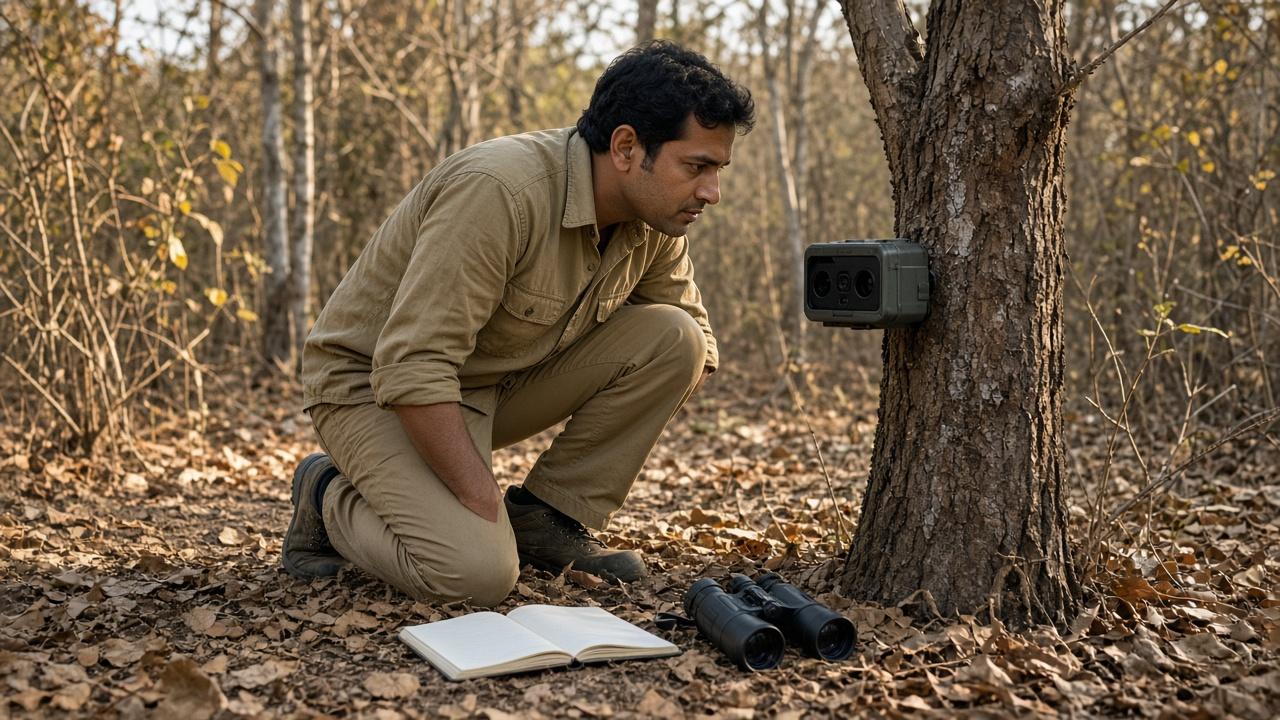
The institute scores each application out of 50 and calls the top ten people on that position for an online interview. Seats, pay and the last date are on the job page. The practice questions cover camera traps, surveys and the species these projects work on.
How the interview call is decided
Shortlisting uses your essential qualification, age, degree percentage, how closely your experience matches the project, and, on the senior rows, research experience and publications. The top ten people on each position are called. Meeting the minimum degree does not by itself get you that call. Put start and end dates on every experience certificate so the relevance marks can be checked.
The 50 marks
The split depends on the level of the row you apply to.
Project Assistant, including the Nicobar post and the cheetah-project assistants.
| Head | Marks |
|---|---|
| Specialisation relevant to the project, shown by an internship, volunteering or earlier work | 25 |
| Percentage in the bachelor's degree, as required for that post | 25 |
| Total | 50 |
Project Associate I, including the SGNP post and the Keoladeo posts.
| Head | Marks |
|---|---|
| Percentage in the master's degree | 25 |
| Specialisation relevant to the project | 25 |
| Total | 50 |
Project Associate II, Senior Project Associate and Principal Project Associate.
| Head | Marks |
|---|---|
| UGC, CSIR or ICAR NET with JRF, or WII NET, as the note describes | 5 |
| Percentage in post-graduation | 25 |
| Research or work experience | 10 |
| Publications: journal papers, conference papers, book chapters | 10 |
| Total | 50 |
The advertisement says that merely holding the minimum degree does not entitle you to an interview. If two forms are equal on paper, the institute's reading of relevance decides. You cannot see that reading in advance. You can make the evidence easy to find: dates on every experience certificate, and the papers listed where the form asks for them.
What each project asks
Prepare the project you ticked, not a general wildlife quiz.
The Sanjay Gandhi National Park row is about a twin tunnel and the wildlife of that park. The desirable line names camera trapping, biodiversity assessment, GIS and remote sensing, linear infrastructure, human-wildlife interaction and habitat. If this is your form, be ready to explain how you would place a camera trap, what a month of photographs can and cannot say, and how a road or a tunnel changes movement.
The cheetah-project rows ask for wildlife ecology, statistics and spatial modelling in R, running a team, and journal papers. The Principal Project Associate is a management role: plan the work, lead the team, write the report. The Senior Project Associate supports that. Project Associate II leads field teams. Project Associate I supports them. The assistants implement work in the field, including remote sites. Match your examples to the level you applied for. A master's student should not describe themselves as the person who designed a multi-site programme if they have not.
Keoladeo is amphibians, reptiles and fishes at Bharatpur. The desirable line names species identification and field data. If your fieldwork is only on large mammals, say so honestly and show whatever survey method does transfer.
The Nicobar row is movement and population connectivity of the Nicobar megapode, including genetic samples, on islands with limited logistics. The desirable line asks for willingness to do that work. A master's is preferred.
How to prepare
Use the days until 8 October 2026 on the form first. A rejected form is not cured by a good interview.
- Pick at most two rows whose essential qualification you already meet.
- Enter marks as on the marksheet. The terms say incomplete proof of education, age or experience leads to rejection.
- For the relevance marks, attach the internship or job letter that names the work, with start and end dates.
- For the senior rows, list publications you can produce if asked. Do not list a paper that is only an idea.
- For the interview, prepare a five-minute account of one field method you have used, the project you applied to, and one limit of that method.
Interview questions, with answers you can revise, are on the practice page.
Source
Advt. No. WII/ADVT. 1/RP-CELL/September, 2026, PDF. Applications at wiirp.com/application.php. Results of the shortlist go on wii.gov.in/news.
Frequently Asked Questions
Your own field season, plus the methods the project uses: camera traps and habitat for Sanjay Gandhi National Park, surveys and spatial analysis for the cheetah posts, amphibians, reptiles and fishes at Keoladeo, and movement and genetics for the Nicobar megapode.
The top ten short-listed candidates for each position.
No. On the senior rows, the named NET qualification is 5 of the 50 screening marks. The master's percentage, experience and publications make up the rest. On Project Associate I and Project Assistant, NET is not in the screening split, though it changes the pay on some rows.