Wildlife Institute of India Interview Questions
Practice questions for Wildlife Institute of India project interviews: camera traps, GIS, field surveys, cheetah habitat, Keoladeo, and the Nicobar megapode.
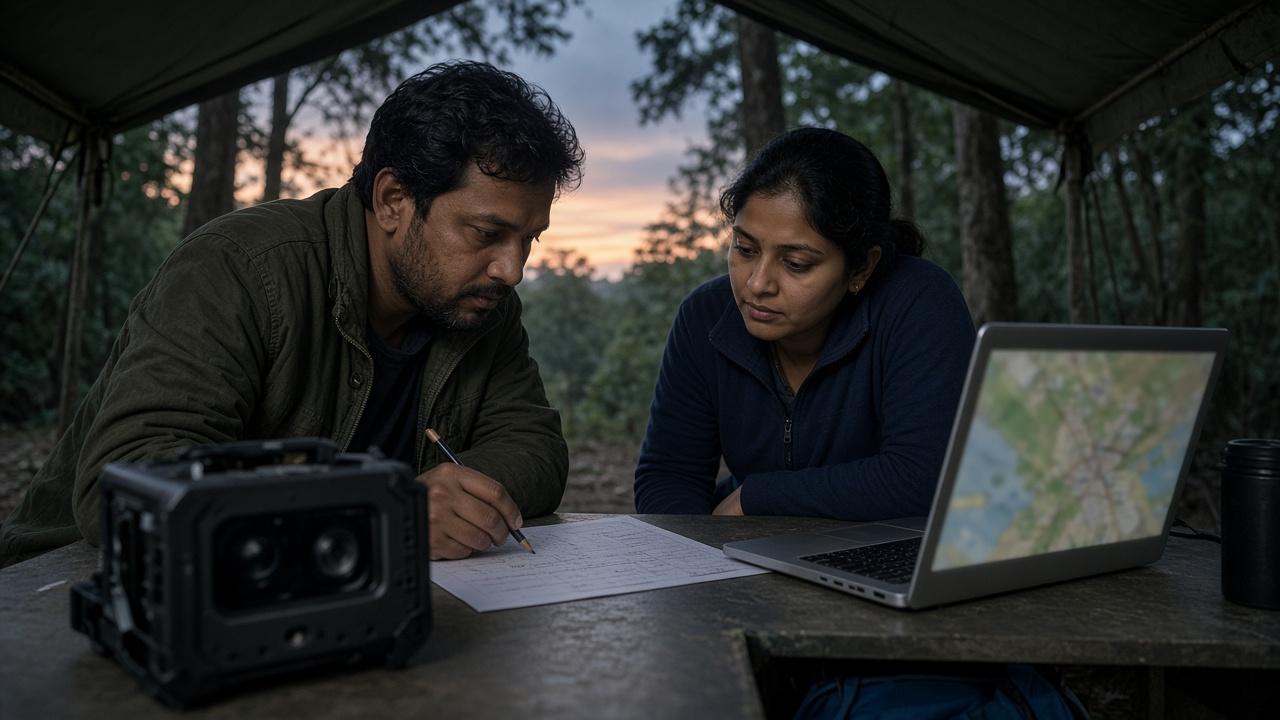
Project interviews at the Wildlife Institute of India ask whether you can do the field work and explain it. The questions below are the ones to prepare, followed by a scored practice set. Seats, pay and the last date are on the job page. How the institute scores your form before the call is on the shortlist page.
Wildlife Institute of India interview questions
Keep a spoken answer ready for each of these.
- Describe one field season you have finished. Where was it, what method did you use, and what did you find?
- How do you deploy a camera trap, and what can a month of photographs tell you?
- How does a road or a tunnel change animal movement?
- What is a habitat corridor, and when does it fail?
- Which spatial tools have you used, GIS or R, and on what data?
- How would you survey amphibians, reptiles or fishes in a wetland?
- What is the Nicobar megapode, and how does it incubate eggs?
- What habitat does a cheetah need, and what happens if that habitat is broken into small pieces?
- What is the difference between occupancy and the number of animals?
- Which samples can you take for genetics without catching the animal?
Write the answers in your own examples. A board can hear a memorised definition. They follow it with "where did you do that?"
Camera traps, GIS and surveys
A camera trap records animals that pass one point. Place it on a trail, at a height that matches the animals you want, and check batteries and cards on a schedule you can keep. The photos show which species came, and how often the camera fired. They do not, by themselves, give the number of animals in the park. If you cannot tell individuals apart, say you would use the photos for occupancy. If the species has clear coat marks, capture-recapture becomes possible. Say which of those you have actually done.
A line transect is a walked line. You record the animal and its distance from the line, because animals farther away are missed more often. A visual encounter survey is a search along a path or inside a plot, with every amphibian or reptile written down. Frog work in the breeding season is often at night, because that is when they call.
GIS is how you put trap points, forest, water and the line of a road on one map. Remote sensing is the satellite or aerial image underneath that map. R is where ecological teams analyse those tables and fit spatial models. If you have used either, open the file before the interview and remember the column names. If you have not, say so and describe the analysis you can do by hand.
Occupancy means the species uses the site. Abundance means how many individuals. Home range is the area one animal uses over time. A corridor is habitat that still lets animals move between larger patches. Edge habitat, beside a road or a clearing, is lighter and more disturbed than the interior of the forest. These four terms come up as soon as a project involves a road, a tunnel, or animals living in separate patches.
Questions on each project
Sanjay Gandhi National Park, Mumbai. The work is the effect of a twin tunnel on wildlife. Be ready for camera traps, habitat, and people and leopards living in the same city forest. A useful answer explains where you would put cameras relative to the tunnel alignment, and what a barrier looks like in the photographs: species present on one side and missing on the other.
Cheetah project. Cheetahs hunt by sprinting in open country. They are a poor fit for dense forest. India's reintroduction has released African cheetahs at Kuno National Park in Madhya Pradesh. Senior roles are asked about teams, study design, and spatial models in R. Assistants are asked about long field days and logistics. Match the answer to the row you applied for. Do not describe yourself as the person who designed the study if you collected data on someone else's design.
Keoladeo, Bharatpur. This is a wetland in Rajasthan. The posts are for amphibians, reptiles and fishes. Talk about night searches, calls, visual encounter surveys, and how you catch or observe fish. The park is also famous for birds. If your work is only on birds, say that, and say which part of the method still applies to frogs or fish.
Nicobar megapode. The bird is found only in the Nicobar Islands. It does not sit on its eggs. It builds a mound, and the mound provides the heat. The project asks about movement between places and about genetic samples. Feathers and eggshells are the non-invasive samples to mention. The field conditions are remote islands. If you have worked far from a road, with limited supplies, that is the example to use.
Practice questions
Twenty questions. Your score is the number you get right. Revise the explanation on every miss, then add one example from your own field work.
Loading the practice paper.
Frequently Asked Questions
Boards ask how you do fieldwork. Expect camera traps, transects, GIS, and the species or habitat of the project you applied for. They also ask you to describe one season of your own work, with dates and results.
Name the method, the place, how long you did it, and what you found. One concrete season is stronger than a list of interests.
The Sanjay Gandhi National Park tunnel study, the cheetah project, amphibians, reptiles and fishes at Keoladeo, and the Nicobar megapode. Seats and pay are on the job page.